 |
International Society for Plant Pathology
Jakob Eriksson Prize |
 |
| |
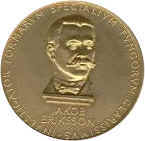
| The Jakob Eriksson Prize for Plant Pathology was established in 1923 at an International Conference of Phytopathology and Economic Entomology at Wageningen, the Netherlands, to encourage creative study of plant pathogens and the processes of disease development in plants. In the 1930's the small associated fund was augmented by contributions from Prof. Hendrik M. Quanjer (Netherlands), Prof. Arthur Jaczewski [i] (1863-1932, Russia) and the American Phytopathological Society, so that the Jakob Eriksson Prize could include a cash award when presented at appropriate future occasions.
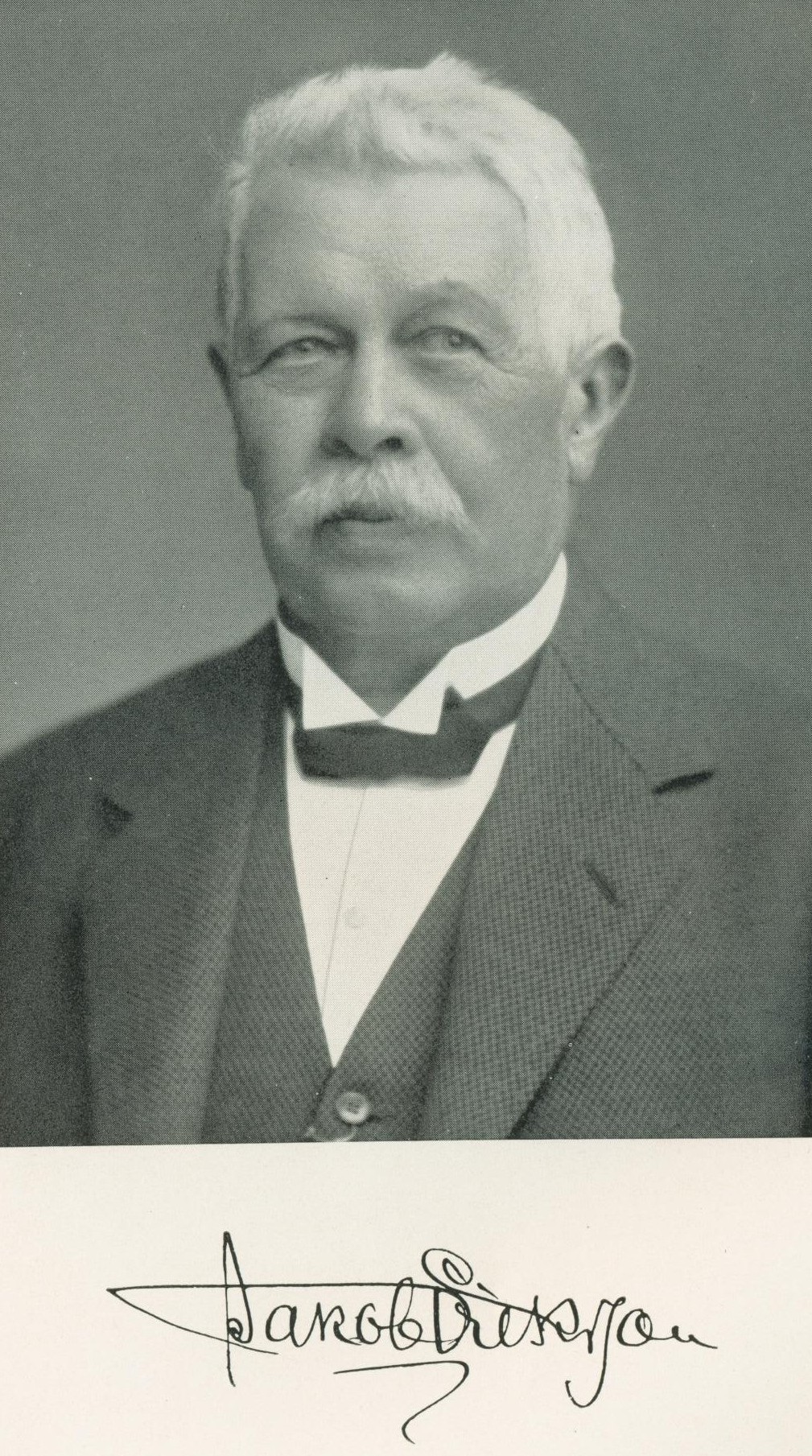
The Prize is named in honor of Jakob Eriksson (1848-1931), a prominent Swedish mycologist and plant pathologist who specialized in fungal taxonomy and parasitism of plant pathogenic fungi. Eriksson wrote in four languages, published a series of plant pathology papers beginning in 1890, and produced a textbook on Fungus Diseases of Plants in Agriculture, Horticulture and Forestry, which became the standard of the discipline. He was a fervent internationalist who promoted cooperation between plant pathologists, and his writings and ideas were instrumental in the formation of the International Society for Plant Pathology in 1968 at the first International Congress of Plant Pathology.
Jakob Eriksson (1848-1931) was an international leader of phytopathology in his time. He created the concept of the formae speciales in cereal rusts and studied the over-wintering of stripe rust (Puccinia striiformis) on wheat. Cited from
Plant Disease Vol 85 No.8
JAKOB ERIKSSON – PUBLICATIONS ON PLANT PATHOLOGY IN SWEDEN AND ADVOCACY FOR
INTERNATIONAL COLLABORATION IN PLANT DISEASE RESEARCH
Eriksson, J.
1913. Work of the Phytopathological Section of the Central Agricultural
Experimental Station in Stockholm in 1912 (International Institute.
Agriculture [Rome], Monthly Bulletin Agricultural Intelligence and Plant
Diseases, IV (July 1913) No 7 pp 1005-1008.
Eriksson, J.
1914. The control of plant diseases in Sweden, (International Institute.
Agriculture [Rome], Monthly Bulletin Agricultural Intelligence and Plant
Diseases, 5 (1914), No. 12, pp. 1546-1553).
In the 1914 paper, Jakob Eriksson provides a brief history of research on
plant diseases in Sweden from 1876 to 1914 (when Eriksson Retired). Eriksson
concludes by summarizing the history of advocacy for international
collaboration on the control of diseases of cultivated plants:
* Collaboration first proposed at the International Congress of
Agriculture and Forestry at Vienna in 1890.
* Motions on international collaboration were also made in Paris
(1900), Rome (1903 and 1905), Vienna (1907), Rome (1907 and 1908),
Montpellier (1908), Rome (1909, 1910, 1911), Paris (1912 and Rome (1913).
INTERNATIONAL COLLABORATION IN PHYTOPATHOLOGY RESEARCH
The realization of Eriksson’s dream came a step closer with the convening of
the International Phytopathological Conference (Rome, February 24-March 4.
1914 at the International Institute for Agriculture in Rome.
The 1914 Conference Recommendations were reported in 1914:
Recommendations of the International Phytopathological Conference (Rome,
February 24-March 4. 1914 (International Institute. Agriculture [Rome],
Monthly Bulletin Agricultural Intelligence and Plant Diseases, V (4) April
1914 pp 542-550.
However, National and institutional rivalries and quarantine concerns
hampered progress. The history of these events is described by Stéphane
Castonguay, the Canada Research Chair in environmental history at the
Université du Québec à Trois-Rivières in Canada. Castonguay, S. 2010.
Creating an Agricultural World Order: Regional Plant Protection Problems
and International Phytopathology, 1878–1939. Agricultural History - AGR HIST
,
vol. 84, no. 1, pp. 46-73, 2010. |
| |
| Recipients of the Jakob Eriksson Prize |
|
The Jakob Eriksson Prize will be presented at the International Congress
of Plant Pathology in Lyon France in 2023.
Information on
the Prize Nomination processes are
here
|
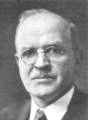 |
The Prize (and US $ 270) was first awarded in 1930 at the 5th
International Botanical Congress at Cambridge, UK, to Professor
John Hubert Craigie (1887-1989) (pictured left) of the
University of Manitoba, Canada. Professor Craigie made pioneering
contributions to the understanding of reproduction in rusts and the
function of rust pycnidia [ii].
*
Reprinted, with permission, from the Annual Review of
Phytopathology,
Volume 18, 1980 by Annual Reviews |
| | |
|
At the
6th Congress in Amsterdam in 1935, no prize was given, but a
decision was taken that the Swedish National Committee should
propose new regulations for the Prize and how to organize its award.
The remaining Prize Funds (3985 Swedish Krona) were sent to Prof
Nils E. Svedelius
(1873-1960) of Uppsala University, President of the Botanical
Section of the International Union of Biological Sciences (IUBS).
No congresses were held during World War II, and in 1950,
the 7th International Biological Congress adopted a resolution:
* that the Botanical Section of the International Union of
Biological Sciences, through a committee of experts elected by the
Section, before each Botanical Congress should nominate a candidate
for the Jakob Eriksson Prize.
* that the fund being
too small for distribution of prizes in cash, the return for five
years investment shall be used to mint a Jakob Eriksson Gold Medal
* that the Royal Swedish Academy of Sciences
should administer the fund.
The first medal was then awarded
in 1959. In 1993 a decision was made by the International
Commission for the Eriksson Prize Fund to sever its relationship
with the Botanical Section of IUBS, and to ask that the
International Society for Plant Pathology to award the Prize at the
International Congress of Plant Pathology in Montreal, and at
subsequent Congresses. |
| | |
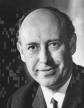 | - 1959. First Recipient - Professor John (Jim) M. Hirst DSC, FRS (1921-1997) of Rothamsted Experimental Station, England, awarded at the 9th International Botanical Congress, Montreal, Canada, for outstanding work of international importance in plant pathology and mycology.
- (1998) 1921-97: John Malcolm (Jim) Hirst, FRS Plant Pathology 47: 543-543.
|
| |
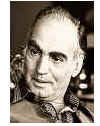 | - 1964. 2nd Recipient - Dr J. C. Santiago of the Plant Breeding Station, Elvas, Portugal awarded in recognition of his work on the cereal rusts, particularly on the epidemiology of wheat stem rust in the western Mediterranean area and northwestern Europe. The prize was presented personally by the Secretary of Agriculture of Portugal in November 1964.
|
| |
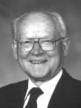 | - 1969. 3rd Recipient - Dr Stanley J Hughes of the Biosystematics Research Centre Central Experimental Farm, Ottawa, Ontario, Canada -awarded at the 11th International Botanical Congress, Seattle, Canada,
Picture reproduced with permission from Selfert, K.A. 1998. Canadian
Journal of Botany 76: Figure 1 p 1489
| | |
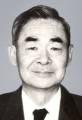 |
- 1975 4th Recipient - Dr Itaru Takebe (1929-1988), Department of Biology, Nagoya University, Furo-cho, Chikusa-ku, Nagoya, Japan awarded at the 12th International Botanical Congress in Moscow, for the one-step multiplication system of tobacco mosaic virus using tobacco protoplasts.
|
| |
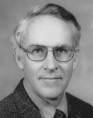 | - 1981. 5th Recipient - Professor Paul Williams of the Department of Plant Pathology at the University of Wisconsin, at the XIII International Botanical Congress in Sydney, Australia 21-28 August 1981, for his work in plant pathology, especially vegetable diseases. Dr Williams's award citation specifically highlighted his outstanding contributions in his studies of the club root disease caused by Plasmodiophora brassicae.
|
| |
 | - 1987. 6th Recipient - Prof. Paul S. Teng of the University of Minnesota, for his contributions to phytopathology, especially in the areas of epidemiology and crop loss assessment, on August 1, 1987,during the XIV International Botanical Congress in Berlin. At an early stage he saw the value of systems analysis and computer technology for the science of phytopathology and he was among the leaders to implement the technology in crop protection. He has given proof of a vast knowledge of agriculture and plant protection in the temperate zone as well as in the tropics."
|
| |
 | - 1993. 7th Recipient - Prof Dr Ir Ariena H.C. van Bruggen, Professor Biological Farming Systems at Wageningen University, at the 6th International Congress of Plant Pathology, in recognition of her original and thorough work on the new disease, 'corky root' of lettuce, caused by a hitherto unknown pathogen, the bacterium Rhizomonas suberifaciens.'
|
| |
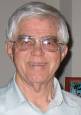 | - 1998. 8th Recipient - Dr Richard Frederiksen, Professor of Plant Pathology at Texas A&M University, at the 7th International Congress of Plant Pathology in Edinburgh, for his promotion of plant pathology internationally, especially for his early research on a serious epidemic of downy mildew of Texas sorghum. Through that work, Frederiksen with his colleagues and several graduate students developed successful management programs to control the disease in sorghum and corn.
|
| |
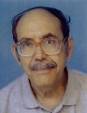 | - 2003. 9th Recipient - Dr. Jaccov Katan of the Hebrew University, Jerusalem, at the 8th International Congress of Plant Pathology in Christchurch, New Zealand, for his original and innovative research in the fields of soil solarization and soil-borne pathogens, his outstanding and broad international cooperation, and his dedication in the education of the younger generations of plant pathologists.
see
Acta Hortica page 32.
|
| |
 | - 2008. 10th Recipient - Dr. Laurence V. Madden, was presented with the award at the 9th International Congress of Plant Pathology in Torino, Italy on Aug. 29 2008, for his numerous seminal research contributions in plant disease epidemiology that have substantially increased our understanding of disease development in time and space. Dr Madden also presented an the inaugural Jakob Eriksson Prize Oration on the topic Contemporary approaches to plant disease forecasting: a case study with Fusarium head blight of wheat.
-
- Professor Madden has pioneered the use of many modelling approaches to: analyze, compare, and predict plant disease epidemics; characterize the spatial pattern of disease incidence, and relate spatial heterogeneity to crop, pathogen, and environmental factors; relate disease dynamics to crop losses; relate environment to disease and inoculum dynamics; and evaluate control strategies. Of major significance is his work with colleagues on development of differential-equation models for plant virus diseases with insect vectors. In this major contribution, the basic reproduction number for predicting invasion and persistence of viruses was derived. In other long-term research, he has shown how spread of diseases with rain-dispersed spores is determined by surface topography, plant canopy, and rain intensity.
-
- Dr. Madden has over 195 peer-reviewed journal articles and two books on plant disease epidemiology to his credit.
|
|
|
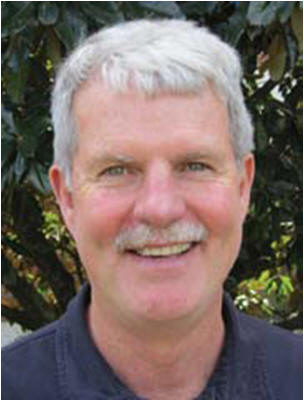 |
2013. 11th Recipient -
Professor Jeffrey B.
Jones of the University of Florida was presented with the Prize
during the closing ceremony of the 10th International Congress of
Plant Pathology in Beijing, China on 30 August, 2013, in
recognition of his outstanding international research on the
interactions between bacterial pathogens and their host plants.
Professor Jones presented the second Jakob Eriksson Prize Oration on
the topic 'Recent approaches for control of bacterial spot of pepper
and tomato and citrus bacterial canker'.
Dr. Jones is
widely regarded as the international authority on Xanthomonas,
a large and diverse genus that causes disease on hundreds of host
species. His most important contribution was the development of a
novel method to genetically modify citrus trees so that a
hypersensitive reaction-inducing gene in citrus is activated by
native Transcription Activator Like (TAL) effectors in
Xanthomonas citri, the cause of Asiatic citrus canker, a major
citrus disease throughout the world. He and co-workers worked
extensively on plant resistance and identified the first source of
resistance in tomato to the bacterial spot pathogen, X.
euvesicatoria. He is a leader in phage therapy for control of
plant diseases. He developed detection strategies for isolating and
identifying bacteria, including seed-borne bacteria. He and
colleagues also developed magnetic immunoisolation to isolate
pathogenic bacteria from samples without large numbers of
contaminating microorganisms. |
|
|
|
 |
2018. 12th Recipient - Emeritus Professor Pierre JGM de Wit
of the Laboratory of Phytopathology, Wageningen University, the
Netherlands for his pioneering research in molecular plant pathology
and plant-microbe interactions.
Read more |
|
| |
|
| |
|
| |
|
| |
|
| |
| Sources. Web references as shown, correspondence with recipients, Dick Hamilton , Maria Ivone Clara and ISPP Executive Committee. Thanks to recipients and colleagues who provided pictures. Special thanks to Mauritz Ramstedt of the Jacob Eriksson Prize Commission for clarification of several points and to the family of Dr J C Santiago for providing a picture and historical information.. |
| |
[i] | - Jones, L. 1932). Arthur Jaczewski: 1863-1932. Phytopathology, 23: III-II6.
|
[ii] | - Craigie, J. H. 1927. Experiments on sex in rust fungi. Nature 120:116-17
- Melander, L. M., Craigie, J. H. 1927. Nature of resistance of Berberis spp. to Puccinia graminis Phytopathology 17: 95-114
- Craigie, J. H. 1927. Discovery of the function of the pycnidia. Nature 120:765-67
- Green, G.J., Johnson, T, and Conners I.L. 1980. Pioneer Leaders in Plant Pathology: J.H. Craigie. Annual Review of Phytopathology, 18: 19-25. (source of picture of J H Craigie with permission)
- Sackston W.E. 1994. John Hubert Craigie. 8 December 1887-26 February 1989
Biographical Memoirs of Fellows of the Royal Society, 39: 131-145.
|
[iii] | - The funds are only administered through the Royal Swedish Academy of Science in Stockholm. It is not a prize from the Academy. Discovering and selecting a worthy "candidate of distinction" is the responsibility of the International Commission for the Jakob Eriksson Prize
-
- Download a print copy of the Eriksson Prize Poster
|
|